
Contact Us
181 2883 6688
sunny.lin@hanyueint.com
2501,Block A,Building 3,Hengmingwan Chuanghui Center,Longcheng Street,Longgang District,Shenzhen
The ceasefire in the Red Sea has not led to the resumption of shipping: CMA CGM, the world's third-largest shipping company, announced that three of its Asia-Europe routes will now bypass the Cape of Good Hope, stating that "the situation in the Middle East remains unpredictable." The market's anticipation of a "return to the Suez Canal" was instantly dashed, with shipping distances, freight rates, and supply chain uncertainties all being prolonged once again.

On January 20, 2026, local time, CMA CGM, the world's third-largest container shipping company, issued a sudden announcement, stating that due to the "complex and uncertain international environment", its three main routes - FAL 1 (Far East - Africa 1), FAL 3 (Far East - Africa 3), and MEX (Mediterranean Express) - would have their vessels rerouted via the Cape of Good Hope, suspending the previously resumed passage through the Suez Canal and the Red Sea. The group emphasized that it would continue to closely monitor the situation and regularly review and adjust its plans. This move directly reversed the market's optimistic expectations for the full return of the Red Sea route and once again cast a shadow over the global supply chain, which had just seen signs of improvement.
This move immediately triggered a strong reaction in the global shipping industry. Just a week earlier, Danish Maersk had announced the structural return of its MECL service (Middle East - India - US East Coast route) to the Red Sea - Suez Canal route, which was regarded by many analysis institutions as a turning point signal for the shipping industry's full return to traditional Asia-Europe routes. CMA CGM's sudden "reverse" undoubtedly dampened some of the market's optimism and also made the industry's assessment of the safety and stability of the Red Sea route once again more cautious.
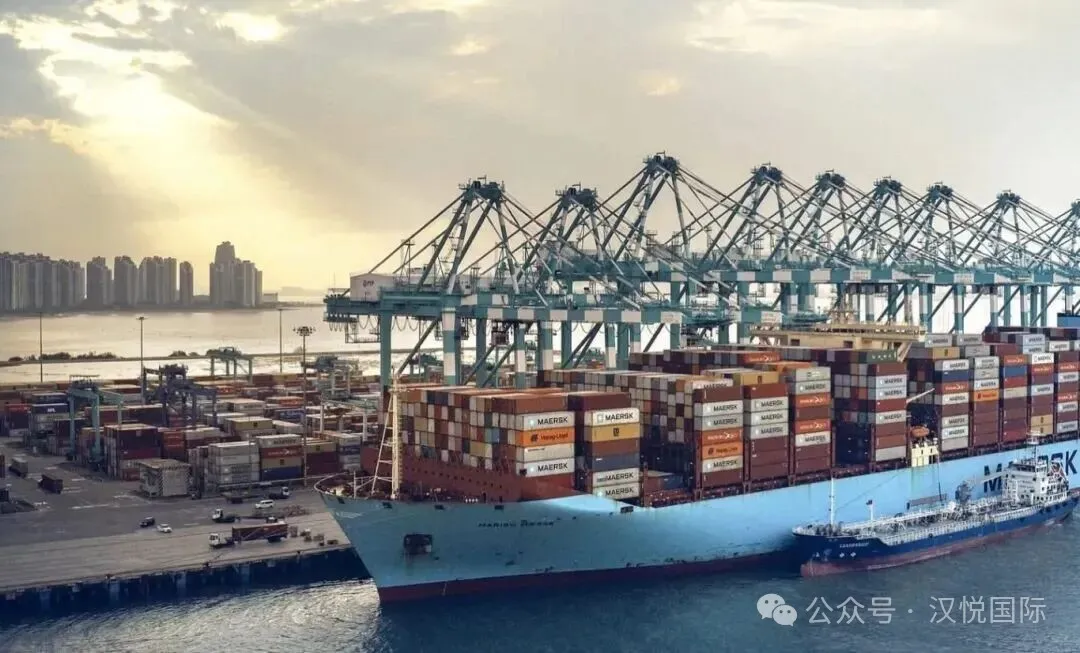
CMA CGM's decision is regarded as a major blow to market confidence. Many analysis institutions had originally expected that as the Houthi ceasefire continued and tensions between the US and Iran were controllable, major liner companies would gradually and in batches return to the Suez Canal in the first half of 2026, thereby releasing a large amount of idle capacity, lowering freight rates and shortening the in-transit time of goods between Asia and Europe.
Philip Damas, the managing director of Drewry Shipping Consultants, stated straightforwardly: "The return to the Suez Canal route is one of the key factors influencing capacity, freight rates, sailing time and fuel consumption in 2026." He pointed out that if major operators continue to wait and see or return in phases, it will help avoid severe congestion at European ports caused by a sudden influx of ships; conversely, if there is a sudden large-scale resumption, it may trigger another round of freight rate collapse.
CMA CGM's "reversal" has cast a shadow over this optimistic expectation. Some analysts even speculate that the French shipping giant's move may be driven by both safety considerations and market strategies: on the one hand, to avoid potential surges in insurance rates and the risk of vessel losses; on the other hand, in the current context where concerns over excess capacity are growing, maintaining the route around the Cape of Good Hope helps support the relatively high spot rates on the Asia-Europe route at present.
CMA CGM's current decision may not be the final outcome, but rather another rational adjustment under the influence of geopolitical uncertainties. Multiple events have converged, highlighting that global maritime shipping, intertwined with the three main lines of "geopolitical risks - environmental compliance - capacity rebalancing", is entering a new normal characterized by high volatility, high costs, and high regulatory thresholds. Han Yue International will closely monitor policy developments and simultaneously make preparations for alternative markets and backup supply chains to maintain flexibility and resilience. Optimize market layout, pre-plan alternative solutions, so that shippers can maintain elasticity and resilience in the face of fluctuations. If you need the latest information or customized response plans, please contact our customer service.