
Contact Us
181 2883 6688
sunny.lin@hanyueint.com
2501,Block A,Building 3,Hengmingwan Chuanghui Center,Longcheng Street,Longgang District,Shenzhen
Since March, the global political and economic stage has witnessed a series of critical events unfolding one after another: the Sino-US tariff dispute has spread to the diplomatic and law enforcement fields, Mexico has launched a systematic wave of trade protectionism, and the shipping crisis in the Strait of Hormuz has continued to escalate. These three events, seemingly independent, all point to a core trend - the global supply chain, energy channels and trade rules are undergoing profound reconstruction, and their impact has permeated multiple levels including industrial layout, market freight rates and energy security.
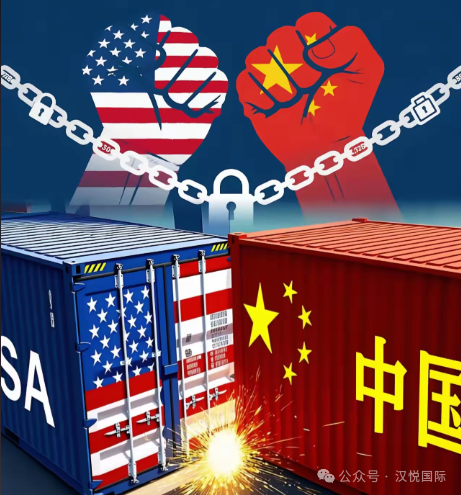
The Vienna Confrontation between China and the US: Fentanyl Issue Becomes a New Battleground
The UN Commission on Narcotic Drugs meeting was held in Vienna, where representatives from China and the United States engaged in a fierce confrontation over the control of fentanyl precursors. The US side made it clear that it would continue to use tools such as tariffs to exert pressure, while the Chinese side accused the US of using the drug issue to promote unilateral sanctions.
The tariff issue is transcending the traditional trade framework and spilling over into diplomatic and law enforcement domains. This implies that the future competition between China and the United States will no longer be a simple "trade war", but a multi-dimensional and systematic confrontation involving areas such as drug control cooperation and law enforcement collaboration.
Heavyweight Tax Hike: Up to 50% Tariff Imposed
Mexico has officially approved a tax increase plan against China and other non-free trade countries, covering 1,463 tariff items including automobiles, steel and textiles, with the highest tax rate reaching 50%. This can be regarded as the most systematic trade protection measure in recent years. President López Obrador has clearly stated that he will strive to eliminate the regional tariffs imposed by the United States on steel, aluminum and automobiles during the review of the USMCA (United States-Mexico-Canada Agreement) which will be initiated on March 16.
This "imposing taxes on imports from outside and reducing taxes on imports from inside" two-way operation clearly exposes its core strategy: sacrificing trade interests with non-free trade countries to strengthen the binding with the North American supply chain, in order to cater to the US demand of "reducing dependence on China". However, the Mexican business community has already issued a warning that the tax increase will push up production costs, disrupt the supply chain, and may eventually backfire on the domestic economy.
Shipping safety has entered the stage of direct government intervention.
The latest attack incident
The British Navy confirmed that a cargo ship was hit by an unknown projectile and caught fire in the Strait of Hormuz.
Location of the incident: Approximately 11 nautical miles off the coast of Oman
The crew is evacuating and the vessel is requesting emergency assistance.
On March 10th, the British Prime Minister's Office announced: Collaborate with allies such as Germany and Italy to study and develop a plan to ensure the safety of shipping in the strait. The focus is on ensuring the smooth passage of merchant ships and the continuity of energy transportation. We have already communicated with energy companies and Lloyd's regarding the war risk insurance arrangements.
The Strait of Hormuz has become "the global energy lifeline"
The shipping lanes have been frequently attacked, and the security situation has become out of control.
Following the US and Israel's military strike against Iran on February 28th, the Strait of Hormuz has become a high-risk shipping lane.
On March 11th, the British Navy confirmed that a cargo ship was hit by an unknown projectile and caught fire north of the coast of Oman. The crew evacuated urgently.
Data from the International Maritime Organization shows that as of March 9th, there have been 9 incidents of ship attacks in this region, resulting in 7 deaths and approximately 20,000 seafarers being stranded.
As a strategic passage connecting the Persian Gulf and the Gulf of Oman, the Strait of Hormuz handles 20% of the world's oil transportation volume. The safety of its passage directly determines the stability of the global energy supply chain.
2. Multiple countries' involvement and market pressure have led the crisis to enter the "global response stage"
The United Kingdom, together with Germany and Italy and other countries, formulated a shipping safety plan and coordinated energy enterprises and insurance companies to improve war risk protection.
Saudi Aramco has issued a "catastrophic consequences" warning, stating that the blockade of the strait will lead to the loss of control of the global oil and gas market. Currently, some goods have been transferred through inventories and pipelines, but the shipping capacity in the Gulf is significantly limited.
The freight rates for oil tankers and the costs of war-risk insurance continue to rise. The cautious attitude of shipping companies towards this shipping route will not be alleviated in the short term. The global trade of energy and bulk commodities will remain under pressure.
From the diplomatic games in Vienna, to the tariff shift in Mexico, and to the shipping crisis in Hormuz - the global supply chain is undergoing a systematic reconfiguration. Han Yue International will closely monitor policy developments, while also making preparations for alternative markets and backup supply chains in advance, maintaining the room for flexibility. Optimize market layout, pre-plan alternative solutions, so that shippers can remain resilient and robust in the face of fluctuations. If you need the latest information or customized response plans, please contact our customer service.