
Contact Us
181 2883 6688
sunny.lin@hanyueint.com
2501,Block A,Building 3,Hengmingwan Chuanghui Center,Longcheng Street,Longgang District,Shenzhen
The Department for Business, Innovation and Skills of the United Kingdom announced in an email statement that as of July 1, 2026, the import tariff on steel will be raised from the current 25% to 50%, and at the same time, the import quotas for several steel products will be significantly reduced, with the total quota amounting to 60% less than the current level.
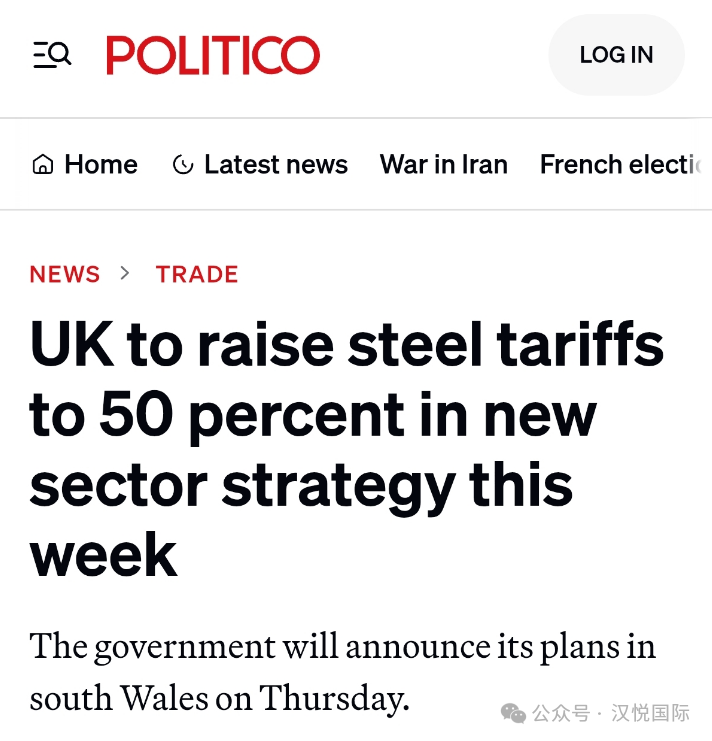
The core adjustments of the new policy focus on two aspects, with an unprecedented scale, and are in line with protection measures in the EU, the US, Canada and other regions. The specific details are as follows:
⚠️ Tariff adjustment: The new policy states that imported steel products within the quota may still enjoy lower or zero tariffs, but the tariffs for imports exceeding the quota will be doubled from the current level to 50%. A senior commercial representative familiar with the relevant plan said that products not produced by British steel manufacturers will "receive some exemptions".
⚠️ Quota Changes: The UK will significantly reduce the import quotas for steel products from overseas. The specific product range and reduction extent are yet to be announced officially. Under the current measures, the quota system allows for a certain amount of low-tariff or zero-tariff imports.
Previously, British officials had informed steel producers and importers from the construction, automotive manufacturing and other industries in advance that, in addition to the new quota, any excess imports would be subject to a 50% tariff. This was done to facilitate the preparation of all parties.
Regarding the exemption policy, another industry insider offered a different expectation: Steel importers are unlikely to obtain all the exemptions they desire, and admitted that the relevant enterprises "have prepared for the worst scenario". At the same time, this person also warned that if the government's import restrictions are overly strict, it will "endanger the interests of downstream manufacturers".
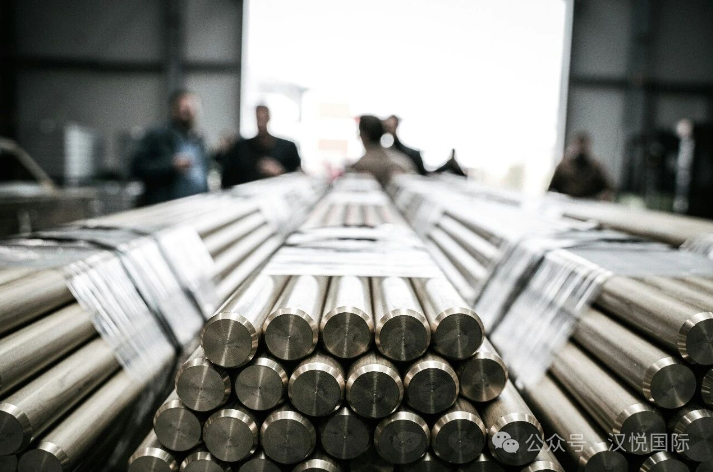
The new policy was introduced due to the severe predicament of the domestic steel industry in the UK: Currently, the industry is under the double pressure of high energy costs and global overcapacity. Tata Steel has closed the blast furnace at Talbot Port, and the British Steel Company is on the verge of bankruptcy. The government was forced to intervene. Although this industry accounts for only 0.1% of the UK's economic output, it supports 37,000 jobs and is crucial for maintaining employment stability.
The UK is not an isolated case. The EU announced a similar policy in October 2025: the import quota for duty-free goods was reduced by approximately 47% to 18.3 million tons, and the excess tariff was also raised to 50%. This policy will replace the steel safeguard measures that expired in June and will come into effect on July 1, 2026, simultaneously with the new policy of the UK.
To prevent tariff evasion and strengthen control, the EU requires steel importers for processing to report the country where the raw steel was "melted and cast", in order to enhance product traceability.
William Bain, the director of trade policy at the British Chamber of Commerce, stated that this move marks the end of an era of continuously decreasing tariffs on manufacturing products and may put pressure on manufacturers that rely on imports. HanYue International will closely monitor policy developments and simultaneously make preparations for alternative markets and backup supply chains to maintain flexibility. It will optimize market layout, preset alternative solutions, and ensure that shippers remain resilient and flexible in the face of fluctuations. If you need the latest information or customized response plans, please feel free to contact our customer service.